
Breakthrough Technology
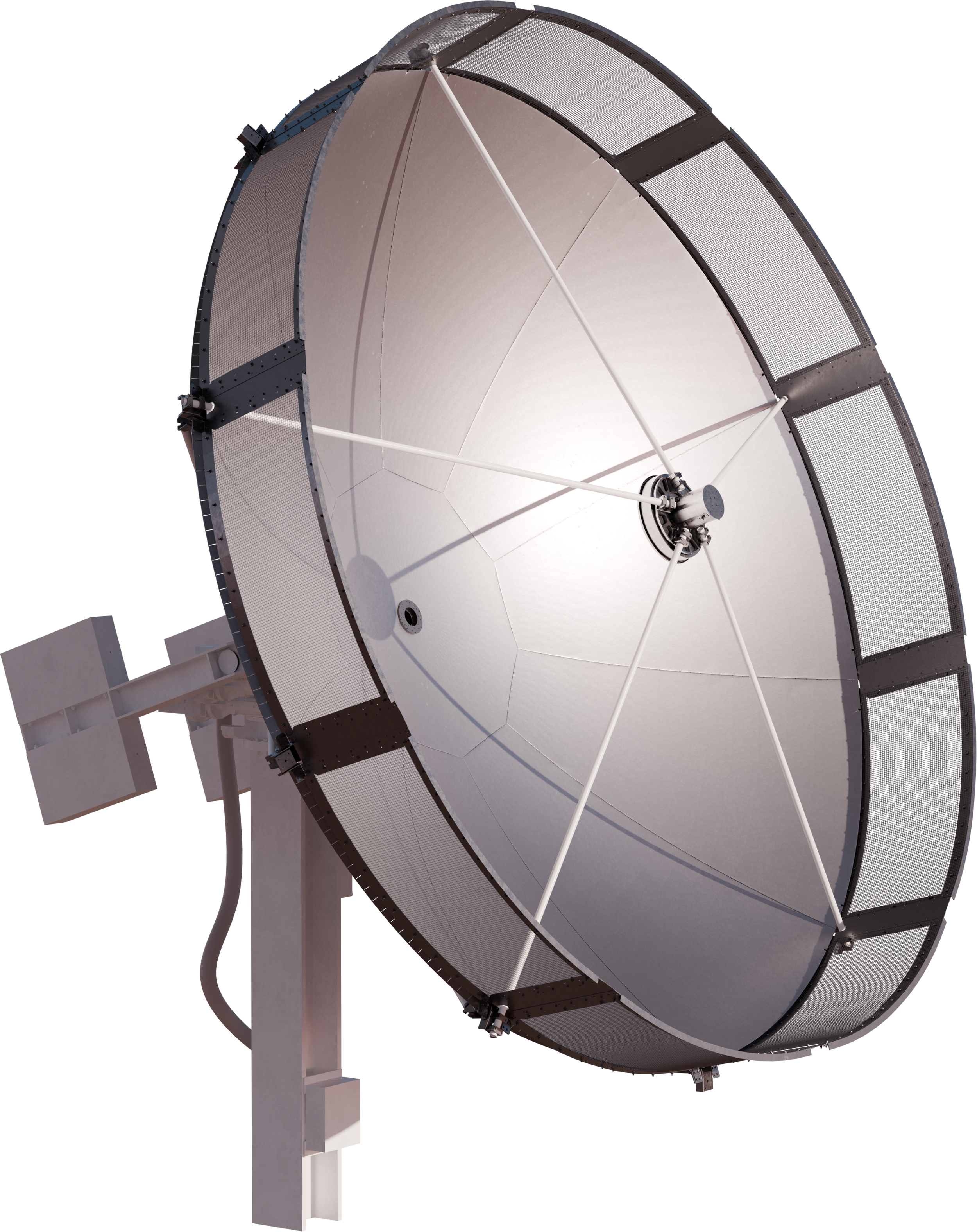
The DSA is enabled by two fundamental breakthroughs in radio telescope technology that together lower the cost per collecting area of the DSA by an order of magnitude relative to other arrays:
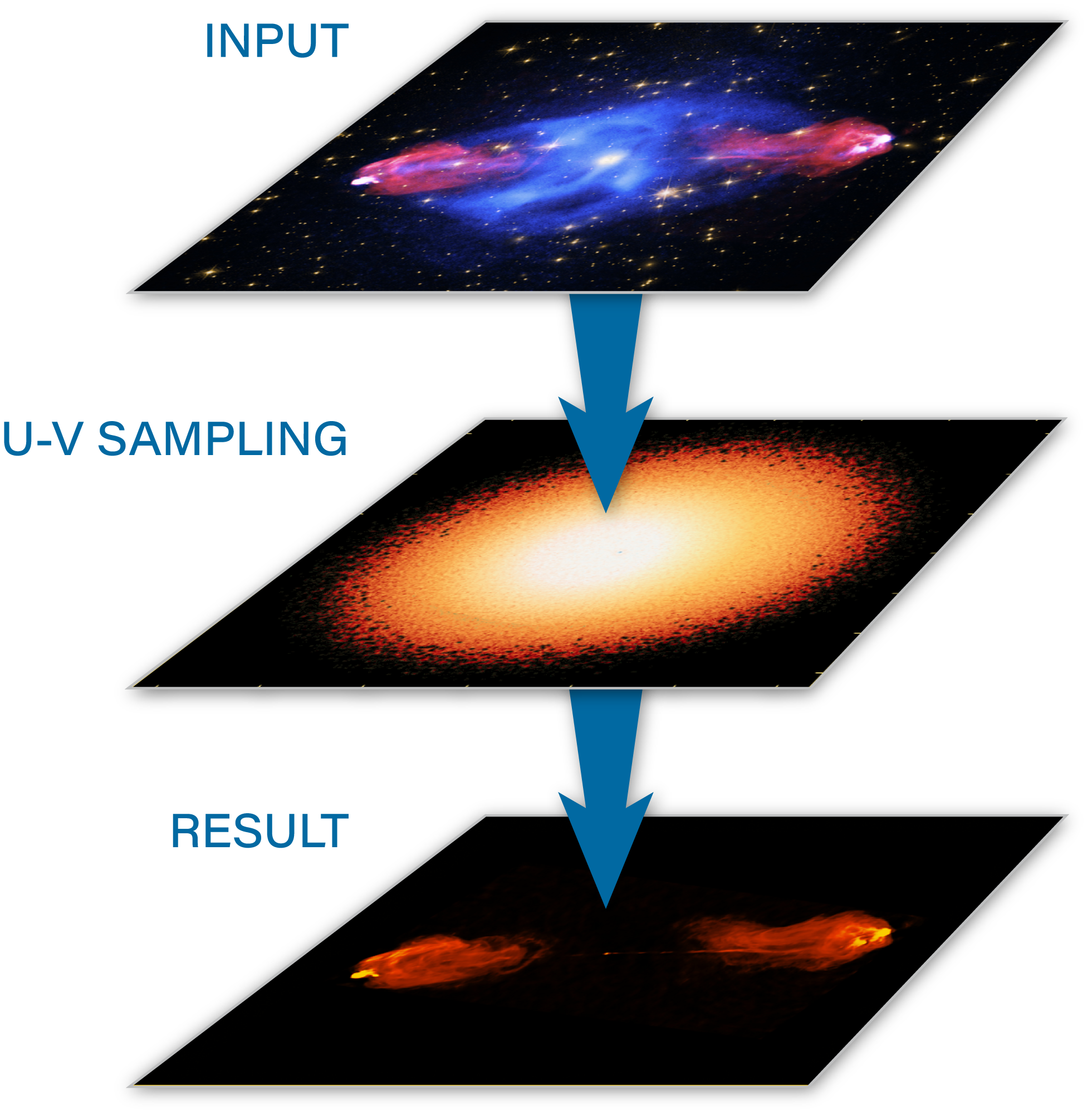
The DSA will break through a barrier in imaging performance with radio arrays via the “radio camera” approach.
The DSA will use ground-breaking ambient-temperature receivers and a low-cost antenna platform, building on established technology demonstrated via the precursor arrays.
The Radio Camera Approach
The data deluge problem in radio astronomy will be solved using a “radio camera” approach that provides end users with science ready images formed with a highly optimized streaming pipeline. This fundamental transition involves cross-correlation and gridding/imaging occurring within the same hardware platform (a GPU), with flagging and calibration applied on-the-fly. Visibilities are not stored long-term. This reduces the data sent to the public archive from the DSA from 20 Exabytes a year (visibilities) to ~1 Petabyte a year (images).
Antenna signals enter the Radio Camera Frontend (RCF), are digitized, channelized and undergo a corner turn (matrix transpose). They then enter the Radio Camera Processor (RCP), where the X-engine, flagging, calibration and gridding/imaging all occur. The dashed line encompasses processing typically carried out within a traditional correlator digital back-end, or about ~15% of the processing carried out by the radio camera. Radio camera hardware will include 2000 dual ADCs, 2,000 FPGAs, >5,000 GPUs, 27,000 CPU cores and 0.5 PB of RAM.
A Low-cost Antenna and Receiver Package
The DSA will use a low-cost antenna platform and ground-breaking ambient-temperature receivers.
A low-cost fully steerable antenna, mount and drive package
+
=
The DSA system temperature Tsys will be 17 K (band averaged) at zenith, increasing by 5 K at a zenith angle of 60 deg due to spillover, with aperture efficiency of 70%. This significantly exceeds requirements specified in the Astro2020 white paper.
A New Generation Antenna
The DSA builds on established technology demonstrated via the precursor arrays (DSA-10 and the NSF/MSIP-funded DSA-110).